Every month, millions of people do something quietly heroic. They work — in warehouses, hospitals, construction sites, restaurants, and offices — in countries far from home, and they send a portion of what they earn back to the people they left behind.
This is the remittance economy. It moves more than $700 billion every year across borders, flowing from wealthy nations to developing ones, from workers to families, from sacrifice to survival. For many households in Nigeria, the Philippines, India, Mexico, and across Latin America, remittances are not supplementary income. They are the income.
And yet the infrastructure that moves this money was built for a different era. The result is a system that charges the people who can least afford it the most to access what they’ve already earned.
The cost of moving money
Sending $200 from the United States to the Philippines through Western Union costs anywhere from $8 to $15 in fees, plus a currency conversion margin that adds another 2 to 3 percent. The money takes one to three business days to arrive. The recipient family gets less than what was sent.
Do that every month for a year and you’ve lost $150 to $200 — just in fees. Over ten years, that’s $1,500 to $2,000 gone. Not lost to exchange rate volatility. Not invested or saved. Just gone, paid to intermediaries for the privilege of moving your own money.
The World Bank tracks remittance costs as a global development issue. The average cost of sending $200 internationally sits at around 6%. In some corridors — particularly those serving sub-Saharan Africa — the average exceeds 8 percent. The United Nations has set a target of reducing remittance costs to below 3 percent by 2030. Progress has been slow.
The system isn’t broken because no one cares. It’s broken because it was designed for banks, not for people.
Why traditional rails are so expensive
To understand why remittances cost so much, you have to understand how money actually moves internationally.
When you send $200 from a bank in New York to a family member in Manila, that money doesn’t travel in a straight line. It passes through a network of correspondent banks — intermediary institutions that each take a cut for facilitating the transfer. Your bank in New York works with a correspondent bank in the US. That bank has a relationship with a correspondent bank in the Philippines. That bank eventually reaches the recipient’s local bank. Each relationship involves fees. Each step adds time.
The system was built for large institutional transactions — trade finance, corporate payments, sovereign transfers. It was never designed to move $200 efficiently. When it tries to, the overhead is disproportionate to the amount.
Money transfer operators like Western Union and MoneyGram built networks that bypass some of this complexity, but their business model depends on the spread. The fee is the product.
What blockchain changes
Blockchain doesn’t route money through correspondent banks. It moves value directly, peer to peer, settled on a decentralized ledger that doesn’t require institutional intermediaries.
The practical implication for remittances is significant. A transaction on a blockchain like Polygon or Base — networks designed for fast, cheap settlement — costs a fraction of a cent to execute and settles in seconds. Not hours. Not days. Seconds.
Stablecoins make this usable for everyday people. Unlike Bitcoin or Ethereum, which fluctuate in value, stablecoins like USDC are pegged to the US dollar. One USDC is always worth one dollar. A worker in Dubai can send $300 USDC to their family in Manila knowing that $300 arrives on the other side — not $285 after fees and conversion, not $310 or $260 depending on what the exchange rate did that day. Three hundred dollars.
The transfer itself is free or near-free. The only cost is when the recipient converts from USDC to their local currency and withdraws to a bank account — a process that, on platforms built for this use case, costs around $2 flat.
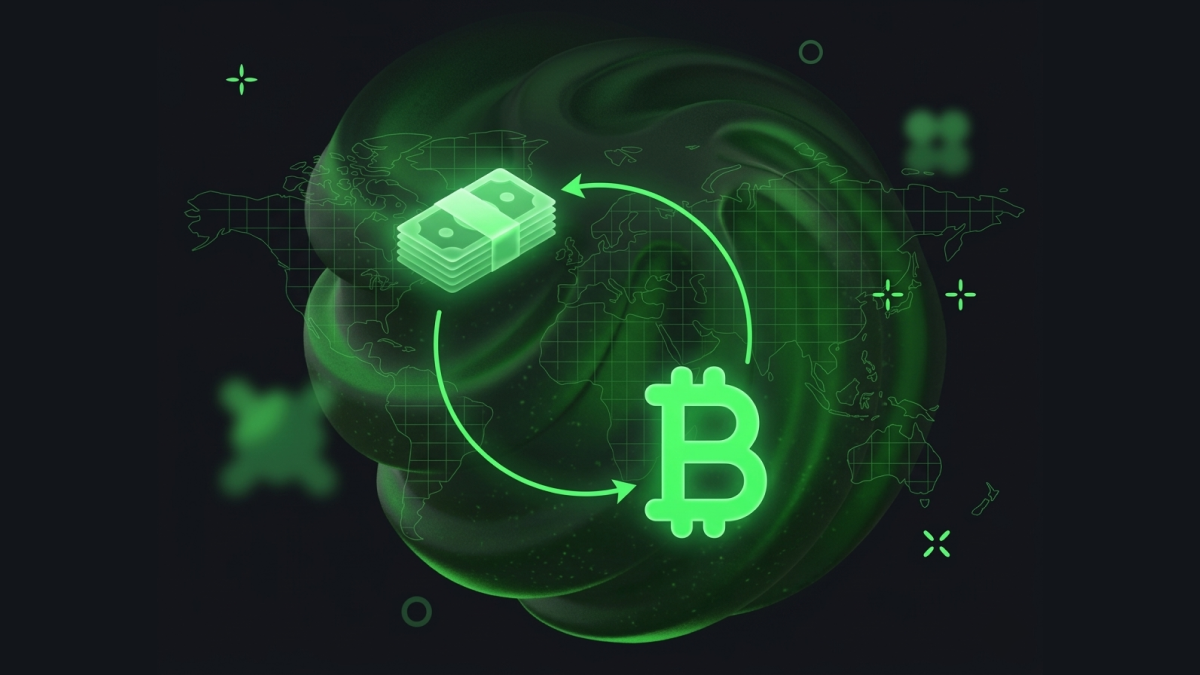
The math is stark. A $300 remittance that costs $25 through Western Union costs $2 through stablecoin rails. That’s a 92 percent reduction.
The adoption gap — and how it’s closing
If blockchain remittances are this much cheaper, why isn’t everyone using them?
The honest answer is that until recently, they required a level of technical literacy that most remittance senders don’t have and shouldn’t need. Setting up a crypto wallet, managing a seed phrase, understanding gas fees, knowing which network to use, avoiding scams — the friction was real, and the consequences of mistakes were permanent. Send to the wrong address and the money was gone.
The infrastructure has matured significantly. A new generation of platforms is being built specifically to abstract that complexity away — to give people the financial benefits of blockchain without requiring them to understand how it works. Custodial wallets mean users can recover access if they lose their phone. Simplified interfaces hide gas fees and network selection. AI-powered automation handles recurring transfers without requiring any manual action after the initial setup.
This is the gap that platforms like Arcvest are designed to close. Users send money the way they would send a text message — enter an amount, choose a recipient, confirm. The blockchain infrastructure does its work invisibly. The family in Manila receives their funds in seconds. The cost to the sender is negligible.
What this means for financial inclusion
Remittances are often the most significant financial lifeline for families in developing economies. When more of that money arrives intact, the downstream effects are real.
A family in the Philippines receiving an extra $150 a year — money that previously went to fees — can redirect that toward school fees, healthcare, or savings. Multiplied across the millions of households that receive remittances, the aggregate impact is substantial.
There’s a broader point here too. Blockchain-based financial infrastructure isn’t just cheaper — it’s accessible in ways that traditional banking is not. Opening a bank account in many developing countries requires documentation, minimum deposits, and physical branch access that many people simply don’t have. A mobile wallet on a blockchain requires none of that. An internet connection and a phone number are sufficient.
The World Bank estimates that 1.4 billion adults globally remain unbanked. A significant portion of them are either sending or receiving remittances through informal channels — cash transfers, hawala networks, hand-delivered envelopes — that are slower, less reliable, and less safe than any digital alternative.
Blockchain doesn’t just reduce fees for people who already have access. It creates access for people who have been excluded from the system entirely.
The road ahead
The remittance industry will not be transformed overnight. Regulatory clarity is still evolving in many markets. Local banking partnerships are essential for the final step of getting money into the hands of recipients. Consumer education is a real and ongoing challenge.
But the direction is clear. The cost of moving money across borders is falling. The speed is increasing. The barriers to entry are dropping. And the technology that makes this possible — stablecoins, blockchain settlement, intelligent financial applications — is maturing faster than most legacy institutions are prepared to respond to.
For the worker sending money home every month, the question is becoming less “can I use this technology” and more “why am I still paying fees I don’t have to pay.”
That shift, when it happens at scale, is worth $700 billion a year.
Arcvest is building the financial infrastructure for global citizens — stablecoin savings, zero-KYC trading, and instant global payments, all in one app. Get started at arcvest.xyz